
Train for an in-demand career in Germany.
Ausbildung is Germany's paid, dual vocational training - classroom plus on-the-job experience across high-demand fields like Nursing, Engineering, Construction and Hospitality. Train tuition-free while earning a monthly stipend. A 12th-grade pass and B1 German are all you need to begin - no blocked account, no bank balance.
Stipend up to €1,200 / month while you train · no tuition fees · 350+ recognised trades
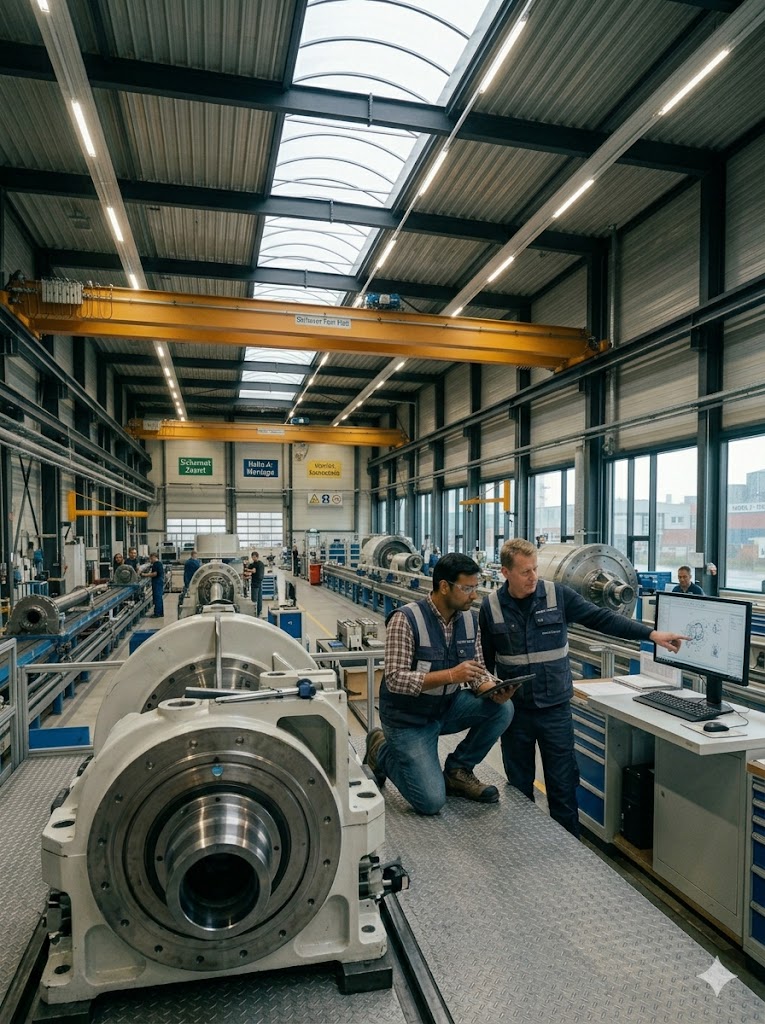
Learn the theory, train on the job
Germany runs one of the world's most respected dual-training systems. You split your time between a vocational school (Berufsschule) and a hospital or care facility, qualifying with the nationally recognised title Pflegefachfrau / Pflegefachmann - a generalist nurse under Germany's Nursing Professions Act (2020).
Over three years you complete roughly 2,100 hours of theory and 2,500 hours of hands-on practice. Most study routes require proof of funds - Ausbildung does not. You're paid a training salary that rises each year, with no tuition fees.
Train and earn your way to Germany
Different from the direct-hire route - here you qualify in Germany, on a stipend, with no tuition fees.
Learn German A1 to B2
Start as a beginner and reach B2 with our trainers - the level Ausbildung requires.
Clear the exam
Goethe, TELC or TestDaF - we prepare you fully.
Apply for Ausbildung
We match you to a Nursing programme and hospital placement.
Visa & departure
Documents, interview prep, and your move to Germany.
Train & earn
Study and train on the job over 2–3 years, earning a monthly stipend.
A clear path to nursing in Germany
Germany is one of the finest places to work and study. With an ageing population and a need for skilled workers, trained nurses are in high demand.
12th pass to start
A 12th-grade pass and a medical-fitness certificate are enough to begin - most training hospitals accept applicants aged around 17 to 35.
Paid while you train
A training salary that rises each year - roughly €1,100 / month in year one to about €1,400 by year three, with no tuition fees.
The §16a training visa
You enter on a vocational-training residence permit (§16a of the Residence Act), the legal route created under Germany’s Skilled Immigration Act.
A recognised qualification
You qualify as a Pflegefachfrau / Pflegefachmann - a generalist nurse under the 2020 Nursing Professions Act, recognised across all of Germany.
After you qualify
Switch to a skilled-worker permit (§18a) and work as a registered nurse earning roughly €3,500–€4,500 a month, with a clear path to permanent residence.
Not at B1 yet?
Start with a 1–2 year Nursing Assistant programme, then upgrade directly into the full registered-nursing Ausbildung.
Eligibility requirements
Ausbildung: your questions answered
Ausbildung is Germany's paid, dual vocational training: classroom study at a Berufsschule combined with on-the-job experience at an employer. You train and earn at the same time, and finish with a qualification recognised across Germany.
A 12th-grade pass, a medical-fitness certificate, and B1 German are enough to begin. Most training employers accept applicants aged roughly 17 to 35, and programmes are open to both men and women.
No. Ausbildung is tuition-free and you are paid a monthly training salary throughout, so there is no blocked account and no minimum bank balance to demonstrate - which is what separates this route from studying in Germany.
Around €1,100 a month in the first year, rising each year to roughly €1,400 by the third.
Around three years of dual training, split between the vocational school and your employer.
You enter on a vocational-training residence permit under §16a of the Residence Act - the legal route created under Germany's Skilled Immigration Act of 2020.
Nursing is the largest route we place students into, alongside Construction, Hospitality and Engineering. Nursing graduates qualify as a Pflegefachfrau or Pflegefachmann, the generalist nursing qualification under the 2020 Nursing Professions Act, recognised in every German state.
You switch to a skilled-worker permit under §18a and work as a registered professional - for nurses, roughly €3,500 to €4,500 a month, with a clear path to permanent residence.
We take you there. You can also start with a one- to two-year Nursing Assistant programme and upgrade directly into the full registered-nursing Ausbildung afterwards.
Ready to train as a nurse in Germany?
It starts with B1 German. Talk to us about your eligibility and the right programme for you - full fee refunded in the rare event a batch is cancelled.